
1. Introduction
А гироскоп is a core sensing component in an inertial navigation system (INS). It measures the angular motion of a vehicle or platform in inertial space and is a key factor determining navigation, guidance, and control accuracy. Since Léon Foucault used a spinning-mass gyroscope to demonstrate Earth’s rotation in 1852, gyroscope technology has evolved for more than a century, from mechanical gyroscopes to optical gyroscopes and microelectromechanical-system (MEMS) gyroscopes, and is now advancing toward new principles such as quantum gyroscopes. Multiple gyroscope technologies currently coexist, while accuracy and SWaP+C (size, weight, power, and cost) continue to improve. Applications have expanded from high-end defense equipment to unmanned systems, autonomous vehicles, and consumer electronics. This article reviews the history of gyroscope technology, summarizes the current status of major gyroscope types, and examines future development trends.
At Andelu, we view gyroscope technology as a foundational element of modern inertial navigation. In this article, we review its evolution, examine the current capabilities of major gyroscope technologies, and discuss the trends shaping their future development.
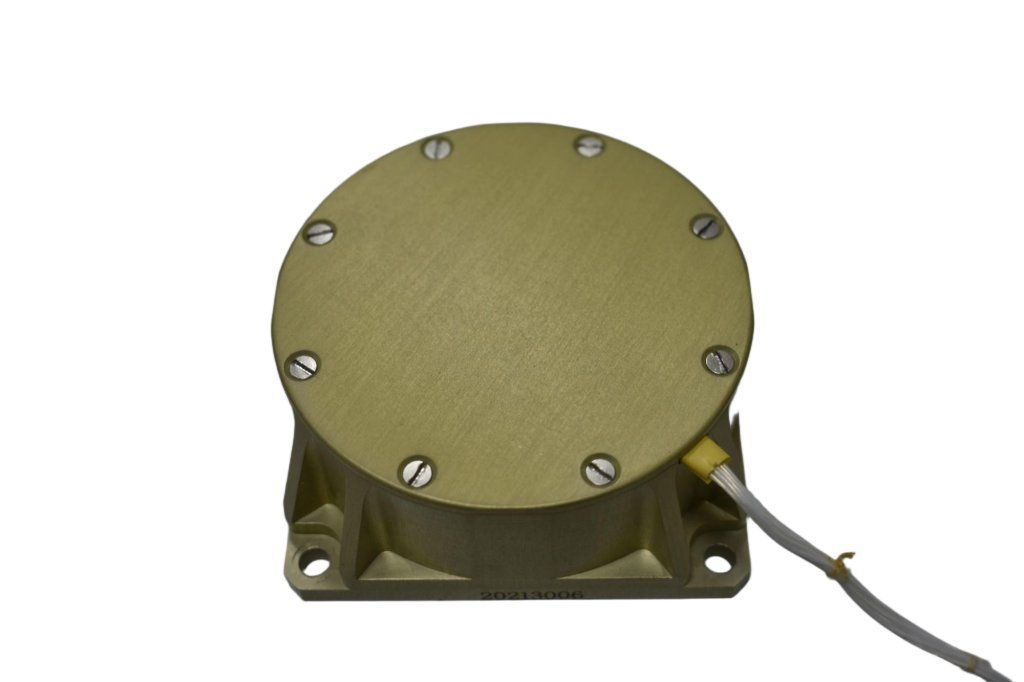
2. The Development History of Gyroscope Technology
Based on operating principles and technology generations, gyroscope technology can be divided into four generations, as shown in Table 1.
Table 1. Gyroscope Technology Development
| Generation | Technology type | Representative products | Main characteristics |
| First | Electromechanical gyroscopes | Floated, electrostatically suspended, three-float, and dynamically tuned gyroscopes | High accuracy (up to the 10^-5°/h level), but complex, large, and costly; gradually being replaced |
| Second | Optical gyroscopes | Ring laser gyroscopes (RLGs) and fiber-optic gyroscopes (FOGs) | No moving parts, fast start-up, wide dynamic range; accuracy of 10^-5 to 10^-4°/h; now mainstream |
| Third | Vibrating gyroscopes | MEMS gyroscopes and hemispherical resonator gyroscopes (HRGs) | Small, low-cost, and mass-producible; HRG accuracy can reach 0.0001°/h, while MEMS is approaching navigation grade |
| Fourth | Quantum gyroscopes | Atom-interferometric, nuclear magnetic resonance (NMRG), and SERF atomic spin gyroscopes | Extremely high theoretical accuracy (10^-8 to 10^-10°/h); still under engineering exploration |
Historically, gyroscope technology has followed two consistent goals: improving accuracy while reducing size and cost. The industry is shifting from a performance-first approach toward a balance between performance and SWaP+C.
3. Current Status of Gyroscope Technology
3.1 Optical Gyroscopes
Optical gyroscopes include ring laser gyroscopes (RLGs) and fiber-optic gyroscopes (FOGs). They are currently the most widely deployed and mature gyroscope technologies.
(1) Ring Laser Gyroscopes (RLGs)
The best bias stability reported for overseas RLGs is 0.00015°/h, with an extremely stable scale factor and excellent dynamic performance. RLGs therefore remain dominant in high-end navigation for aircraft, ships, and strategic missiles. Recent work focuses on miniaturization and higher accuracy. Supported by DARPA, the California Institute of Technology developed a chip-scale ring laser gyroscope with an angle random walk (ARW) as low as 0.068°/√h and bias stability of 3.6°/h; it can measure Earth’s rotation. Honeywell’s GG1320 digital RLG is widely used in NASA deep-space missions such as OSIRIS-REx. Northrop Grumman continues to produce the AN/WSN-7 RLG inertial navigation system, with a positioning error of approximately 1 nautical mile per day, and is developing the next-generation WSN-12.
(2) Fiber-Optic Gyroscopes (FOGs)
The highest reported FOG accuracy has reached 0.00003°/h. FOGs are all-solid-state devices with no moving parts and high reliability. Recent development has focused on higher accuracy, miniaturization, and integration.
For high accuracy, Tokyo Institute of Technology used a 5 km fiber coil to achieve an ARW of 15 μ°/√h and bias instability of 33 μ°/h.
For miniaturization and integration, Russia’s Optolink introduced the IMU400, measuring 80 mm × 95 mm × 62 mm, with gyro bias stability of 0.01°/h and ARW of 0.007°/√h. Fizoptika’s VG191A has a diameter of only 24 mm and a mass of 30 g. Using photonic integrated circuit (PIC) technology, KVH launched the P-1775 IMU, whose accuracy is 20 times higher than that of a MEMS device of the same size. ANELLO Photonics in the United States introduced the ANELLO X3, a three-axis photonic-integrated FOG IMU with bias stability below 0.5°/h, ARW below 0.05°/√h, power consumption below 5 W, and mass below 0.5 lb. France’s Exail (formerly iXblue) launched the compact UmiX FOG series, using 127 μm polarization-maintaining fiber. Its approximately 40 mm outer-diameter fiber coil provides a 3.5 m² Sagnac area and an ARW of 0.006°/√h.
FOG applications continue to expand in unmanned systems, naval vessels, and armored vehicles. For example, Exail’s Marins inertial navigation system has been deployed on more than 650 surface vessels and underwater platforms.
3.2 MEMS Gyroscopes
MEMS gyroscopes are based on the Coriolis vibratory effect. Their small size, low power consumption, low cost, and batch-manufacturing capability have enabled broad adoption in tactical, industrial, and consumer-electronics markets. In recent years, navigation-grade MEMS gyroscopes have made major breakthroughs.
(1) Dual-mass architecture: In Honeywell’s HG7930 MEMS IMU, gyro ARW is 0.0035°/√h and full-temperature bias stability is 0.21°/h, an improvement of more than one order of magnitude over the previous generation.
(2) Four-mass architecture: The University of California, Irvine developed a symmetric four-mass gyroscope with a Q factor of up to 1 million and a simulated ARW better than 0.0005°/√h, indicating potential beyond navigation-grade accuracy. Northrop Grumman’s four-mass MEMS gyroscope has bias stability of 0.01°/h (Allan variance) and ARW of 0.0045°/√h, and is supported by the DARPA PRIGM program.
(3) Multi-ring resonator architecture: Boeing’s 8 mm multi-ring gyroscope achieves bias stability better than 0.037°/h and ARW of 0.0033°/√h. General Electric developed a multi-ring gyroscope capable of operating at 300°C for measurement-while-drilling applications.
(4) Other novel MEMS gyroscopes: Safran developed an axisymmetric dual-mass MEMS gyroscope with room-temperature bias instability of 0.007°/h and full-temperature error of 0.1°/h, approaching navigation-grade performance. ONERA’s GYTRIX quartz MEMS gyroscope has an ARW of 0.003°/√h and bias stability better than 0.1°/h. A piezoresistive NEMS gyroscope from Politecnico di Milano reports noise of 0.005°/√h and bias instability of 0.015°/h. The University of Michigan’s precision shell-integrated (PSI) gyroscope has a 1 cm diameter, a Q factor of 5.2 million, ARW of 0.00016°/√h, and bias stability of 0.0014°/h, with no temperature compensation required.
(5) Products and applications: EMCORE’s SDI500 quartz MEMS IMU provides gyro ARW better than 0.0008°/√h and bias stability of 0.005°/h, and has been used in the MK-54 torpedo. France’s SBG Systems Pulse-40 tactical MEMS IMU measures only 50 mm × 37 mm × 23 mm and weighs 38 g. Japan’s TDK (Tronics) GYPRO4300 has bias instability of 0.4°/h and ARW of 0.07°/√h. Silicon Sensing’s PinPoint miniature gyroscope (5 mm × 6 mm) has been used in a German Mars-moon exploration mission.
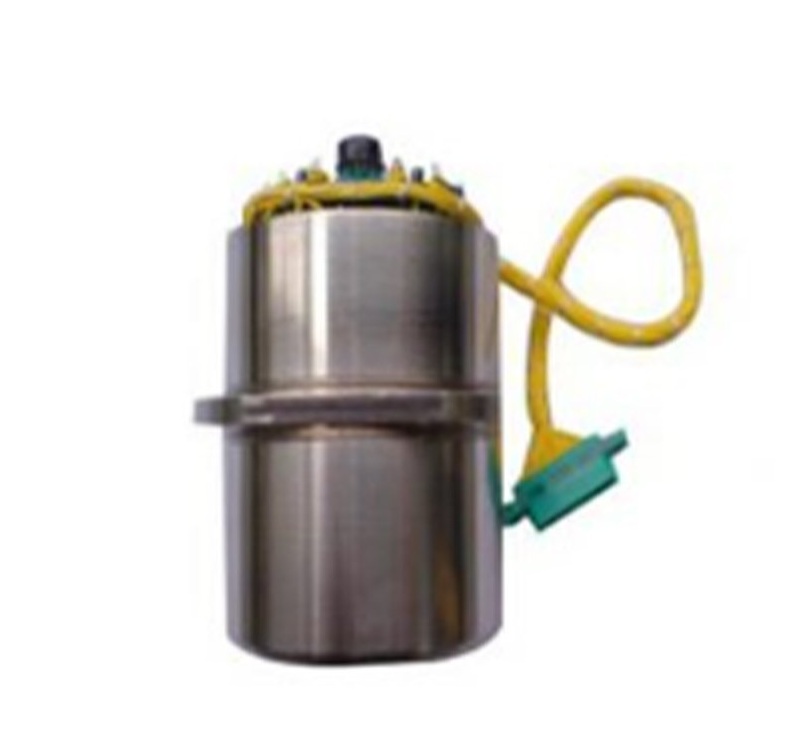
3.3 Hemispherical Resonator Gyroscopes (HRGs)
An HRG is a high-precision vibrating gyroscope featuring a simple structure, a service life exceeding 20 years, high reliability (0.995), radiation resistance, and exceptional environmental adaptability (operating temperature from -95°C to 155°C). Northrop Grumman in the United States and Safran in France are currently the leading suppliers, with peak accuracy reaching 0.0001°/h.
(1) Northrop Grumman: The HRG130P space gyroscope offers an ARW of 0.00002°/√h and has accumulated more than 30 million fault-free operating hours. It withstands shocks above 3,000 g and is primarily used in high-value space missions.
(2) Safran: Its rate-integrating mode (whole-angle control) provides a theoretically unlimited measurement range while substantially reducing cost and size. Safran’s HRG CrystalTM gyroscope is mass-produced at 25,000 units per year, with bias stability of 0.0001°/h or even 0.00001°/h through dual-core self-calibration. HRG-based inertial navigation systems include BlueNaute (maritime), SIGMA20 (land), BLACK-ONYX (marine, positioning accuracy of 1 nautical mile in 120 hours), and GeonyxTM (land and air). Their mean time between failures (MTBF) can reach 200,000 to 1,000,000 hours. Safran has also introduced the Iconyx IMU, integrating three HRGs and three MEMS accelerometers.
(3) Micro-HRGs: The University of Michigan developed a 1 cm birdbath-type micro-HRG with a Q factor of 5.87 million to 12.5 million and short-term bias stability of 0.00138°/h. The University of California, Irvine developed a fused-quartz dual-shell gyroscope with a Q factor of 1.83 million and ARW of 0.03°/√h. These advances show that HRGs are rapidly moving toward miniaturization, lower cost, and volume production.
3.4 Atomic Gyroscopes
Atomic gyroscopes offer the greatest accuracy potential among emerging gyroscope technologies. Major categories include nuclear magnetic resonance gyroscopes (NMRGs), spin-exchange-relaxation-free (SERF) atomic spin gyroscopes, and atom-interferometric gyroscopes.
(1) Nuclear magnetic resonance gyroscopes: Northrop Grumman developed a prototype in 2007 with performance comparable to navigation-grade FOGs. A SERF gyroscope at Princeton University achieved bias drift better than 0.04°/h and ARW better than 0.002°/√h. Beihang University observed the atomic gyroscope effect with ARW better than 7.2 × 10^-8°/√h. U.S. company Twinleaf reports nuclear-spin gyroscope accuracy of 1 × 10^-4°/h.
(2) Atom-interferometric gyroscopes: A Stanford University/Yale University collaboration achieved short-term rotation-rate sensitivity of 6 × 10^-10 rad/s/√Hz. AOSense reports atom-interferometric gyroscope accuracy of 5 × 10^-6°/h. Sandia National Laboratories developed an atom-interferometric gyroscope measuring 20 mm × 30 mm × 60 mm with sensitivity of 1 × 10^-6 rad/s/√Hz.
(3) Engineering progress: Atomic gyroscopes remain in the transition from laboratory research to engineering products. Cold-atom gravimeters, however, have reached commercialization. Exail’s differential quantum gravimeter (DQG) offers resolution better than 1E (10^-9/s²) and can be used for volcano monitoring and gravity mapping. In 2024, Infleqtion and BAE Systems completed the first commercial flight test of a quantum navigation system.
4. Development Trends and Future Outlook
Based on the latest developments worldwide, future gyroscope technology is expected to follow these trends:
4.1 High Precision Remains the Ultimate Goal
Accuracy improvement remains the core driver of gyroscope technology. Optical gyroscopes will continue to pursue breakthroughs beyond the shot-noise limit through technologies such as photonic entanglement and same-frequency resonant sensing/entanglement. HRGs will further improve accuracy and stability through self-calibration and whole-angle control. Once atomic gyroscopes overcome engineering barriers, they could deliver a disruptive gain in precision.
4.2 Low SWaP+C Is Critical to Commercialization
As drones, smart munitions, autonomous vehicles, and wearable devices scale up, size, weight, power, and cost (SWaP+C) have become core measures of market competitiveness. MEMS gyroscopes and photonic-integrated miniaturized FOGs (PIC-FOGs) have clear advantages. For example, the ANELLO X3 occupies only 8 cubic inches, consumes less than 5 W, and achieves tactical-grade performance. Safran’s HRG IMU measures 6 cm × 9 cm × 9 cm, weighs 430 g, and consumes less than 5 W.
4.3 Multiple Principles Will Coexist for Different Roles
Over the next decade, optical gyroscopes will continue to dominate strategic and high-end navigation. MEMS gyroscopes will cover the broad range from consumer electronics to navigation-grade systems and gradually move upward. HRGs will expand in high-reliability, long-life, maintenance-free applications such as spacecraft and unmanned vessels. Atomic gyroscopes will gradually enter ultra-high-precision strategic applications.
4.4 Deep Integration of Quantum and AI Technologies
Quantum entanglement, photonic integration, and artificial-intelligence algorithms are being incorporated rapidly into gyroscope design and manufacturing. AI-based error modeling, self-calibration, and adaptive compensation have become effective ways to improve overall gyroscope performance. For example, in the DARPA-supported PRIGM program, Northrop Grumman used dynamic self-calibration to raise MEMS gyroscope accuracy to the navigation grade. In the future, combining quantum sensing with edge AI may enable intelligent gyroscopes with autonomous perception and decision-making.
4.5 Precision Manufacturing and Micro-Stress Control Are Common Bottlenecks
Whether machining quartz resonators for HRGs or performing wafer-level vacuum packaging for MEMS gyroscopes, precision microfabrication directly determines the performance ceiling. Breakthroughs in high-purity fused quartz, low-stress assembly, and entropy-increase analysis will be essential for improving gyroscope accuracy and consistency.
5. Conclusion
Gyroscope technology is the “heart” of inertial navigation, and its maturity directly defines the capability boundaries of defense equipment and civilian navigation systems. Optical gyroscopes are mature and widely deployed; MEMS gyroscopes are moving from tactical grade toward navigation grade; HRGs are becoming a preferred option for high-end applications because of their outstanding overall performance; and atomic gyroscopes represent the future direction. China has made significant progress in optical and MEMS gyroscopes, with some metrics reaching internationally advanced levels, but gaps remain in HRG materials and processes and in the engineering of atomic gyroscopes. Going forward, China should strengthen work on foundational materials, ultra-precision manufacturing, integrated photonics, and intelligent algorithms to move its gyroscope technology from “catching up” to “parallel development” and ultimately “leading.”