
А gyroscope sensor tracks angular velocity. This shows how fast an object spins around one or more axes. Engineers often face a real task here. They must pick a unit where drift, temperature response, bandwidth, and ruggedness fit the job at hand.
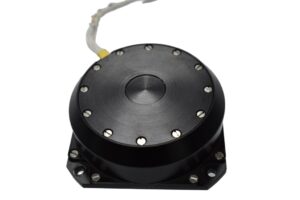
What Is a Gyroscope Sensor and What Does It Measure?
A gyroscope sensor, also known as an angular-rate sensor, picks up rotational motion. Its output usually shows up in degrees per second.
Angular Velocity, Angle, and Orientation
The sensor reads angular velocity right away. Engineers normally work out the rotation angle by integrating that velocity over time. Orientation needs extra steps. It often blends gyroscope readings with accelerometer data or outside references.
Integration builds up error over time. Even a tiny bias in the rate output can grow into a clear heading or attitude mistake after a few minutes.
Roll, Pitch, Yaw, and Drift
Three-axis rotation often breaks down into roll, pitch, and yaw. Some stabilized setups need only one accurate axis. A UAV or mobile robot usually requires three-axis readings instead.
Gyroscope output may include bias, random noise, scale-factor error, temperature drift, cross-axis sensitivity, and mounting error. When designing a system, engineers have to consider more than the accuracy of a sensor. It is also important to know how fast the error of a sensor is increasing within the real operating area of the sensor.
How Does a Gyroscope Sensor Work?
Various gyroscope types rely on different physical effects. The overall flow stays similar. The platform turns, the sensing element reacts, that reaction turns into a signal, and calibration plus filtering deliver usable angular-rate data.
From Rotation to a Usable Signal
The internal shift may happen inside a vibrating structure, a light path, or a controlled rotor. Because the shift stays small, it must be sensed, boosted, filtered, and corrected before the unit sends an analogue or digital output.
That output feeds a control algorithm, IMU, or INS. It does not give a finished navigation result by itself.
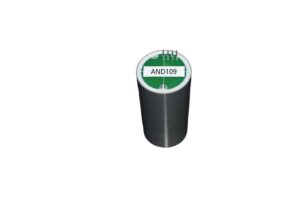
How MEMS, FOG, and DTG Technologies Detect Rotation
А МЭМС-гироскоп holds a tiny vibrating structure. Rotation triggers the Coriolis effect and creates motion in a second direction. The sensor spots this shift and turns it into angular-rate data. MEMS designs help keep size small, power low, and integration simple.
A fiber optic gyroscope sends light both ways through an optical path. Rotation produces a phase shift via the Sagnac effect. Measuring the shift gives angular velocity. FOG units are often chosen when lower drift and better stability matter most.
DTG technology uses a controlled rotor and flexure design. It offers a proven choice for inertial work that needs steady results in tough settings.
At Andelu, our range covers several technology paths because no single approach fits every platform.
Why Calibration Matters
Calibration can correct bias, scale factor, axis misalignment, nonlinearity, and temperature effects.
A broad temperature range only confirms the sensor works inside those limits. It does not ensure steady accuracy across the full span. Engineers should also review the calibrated temperature window, warm-up time, repeatability, and leftover error after compensation.
What Types of Gyroscope Sensors Are Used in Modern Systems?
The best type depends on accuracy needs, mission length, environment, power, size, and cost.
MEMS, FOG, and DTG Options
MEMS gyroscopes fit compact, low-power systems such as UAVs, robots, vehicles, and small inertial units. Units in this group can still vary widely in bias stability, angular random walk, and temperature behavior.
FOG products appear often in navigation, orientation, marine work, autonomous platforms, and precision stabilization. Their lower drift supports longer stretches of reliable heading and attitude data, though size, power, bandwidth, and cost still count.
DTG products suit established inertial and industrial uses where proven reliability and environmental toughness matter.
The final pick should rest on the full error budget rather than any blanket claim that one technology always wins.
Single-Axis, Dual-Axis, and Three-Axis Designs
A single-axis gyroscope works well for one clear rotation direction or a critical axis. Dual-axis units handle two directions. Three-axis units suit full motion sensing and IMU work.
Extra axes do not guarantee better accuracy. The axis count should match the motion model and overall system design.
Where Are Gyroscope Sensors Used?
Gyroscope sensors appear wherever rotation must be measured, controlled, or offset.
Navigation, Stabilization, and Control
In an INS, gyroscope data supports ongoing attitude calculation. Attitude error can affect velocity and position because accelerometer readings must be converted into the navigation frame.
For stabilization and control, angular-rate feedback helps fix unwanted motion in UAVs, antennas, cameras, robotic systems, and precision pointing platforms.
Vehicles, Marine Platforms, and Industrial Systems
Land vehicles rely on gyroscopes for heading estimates, motion detection, and navigation continuity. Marine and underwater platforms use them where outside signals may drop out. Industrial setups apply them for orientation, drilling, surveying, motion tracking, and precision measurement.
When GNSS drops in tunnels, urban canyons, forests, or underground sites, inertial data keeps running without pause. Vehicle systems may also add odometer data, altimeters, or motion rules to slow error growth. Sensor fusion aids continuity, yet gyroscope quality still sets the strength of predictions between outside updates.
How Do Gyroscopes Fit into an IMU and INS?
Gyroscope vs Accelerometer
A gyroscope measures angular velocity. An accelerometer measures specific force. Together they give a clearer view of platform motion.
Gyroscope Sensor vs IMU vs INS
A gyroscope sensor is a single angular-rate device. An IMU usually combines gyroscope and accelerometer axes along with calibration, filtering, temperature compensation, and communication features.
An INS adds navigation math that includes attitude, velocity, position, coordinate changes, and error handling. Our products at Andelu include gyroscope sensors, IMUs, and inertial navigation solutions, so customers can select the right integration level.
How Should Engineers Choose the Right Gyroscope Sensor?
Define the Operating Need
Clarify whether the sensor will support stabilization, control, orientation, dead reckoning, or longer navigation. Then list the number of axes, maximum angular rate, bandwidth, allowed drift, run time, temperature range, vibration level, interface, size, power, and budget.
Compare the Specifications That Matter
Bias stability shows how the zero-rate output shifts over time. Angular random walk reflects short-term noise. Scale-factor accuracy shows how closely output follows true rotation. Measurement range avoids saturation, while bandwidth sets response speed.
Temperature behavior, shock resistance, vibration tolerance, warm-up time, repeatability, axis alignment, and calibration method can matter as much as headline accuracy.
A sensor can still fail at system level if its interface, update rate, synchronization, connector, or power supply does not match the host platform.
When asking for a recommendation, share the application, target accuracy, axis count, range, operating environment, interface, size limits, and expected quantity. We use this information at Andelu to suggest a suitable gyroscope sensor or inertial solution.
Часто задаваемые вопросы
Q: What Is a Gyroscope Sensor Used For?
A: A gyroscope sensor measures angular velocity for navigation, attitude control, stabilization, robotics, UAVs, vehicles, marine systems, and industrial equipment.
Q: How Does a Gyroscope Sensor Work in an IMU?
A: It tracks rotation while accelerometers track specific force. The IMU blends both data types to estimate attitude and motion with more reliability.
Q: Does a Gyroscope Sensor Measure Angle or Angular Velocity?
A: It normally reads angular velocity directly. Angle comes from integration, so bias and noise can produce drift over time.
Q: Which Gyroscope Sensor Type Is Best for Inertial Navigation?
A: No single type works best everywhere. MEMS may suit compact and low-power systems, while FOG or DTG products may fit better when lower drift or stronger stability is needed.
Q: What Gyroscope Sensor Specifications Matter Most?
A: Key specifications include bias stability, angular random walk, scale factor, range, bandwidth, temperature behavior, shock and vibration resistance, calibration, interface, size, weight, and power.