
Introducción
The accelerometer as one of the two core sensing devices in an inertial navigation system, alongside the gyroscope. It measures the linear acceleration of a vehicle or platform in inertial space. Integrating acceleration once produces velocity, while integrating it twice produces position. Accelerometer accuracy and stability therefore directly affect navigation and positioning performance.
Accelerometer technology has evolved over several decades, from pendulous integrating gyroscopic accelerometers and liquid-floated pendulous accelerometers to quartz flexure accelerometers, MEMS resonant accelerometers, atom interferometer accelerometers, and micro-optical accelerometers. This development has followed a continuous trend toward higher accuracy, smaller size, lower cost, and greater reliability.
In this article, we review the development of accelerometer technology, examine the main accelerometer types, and discuss their future development.
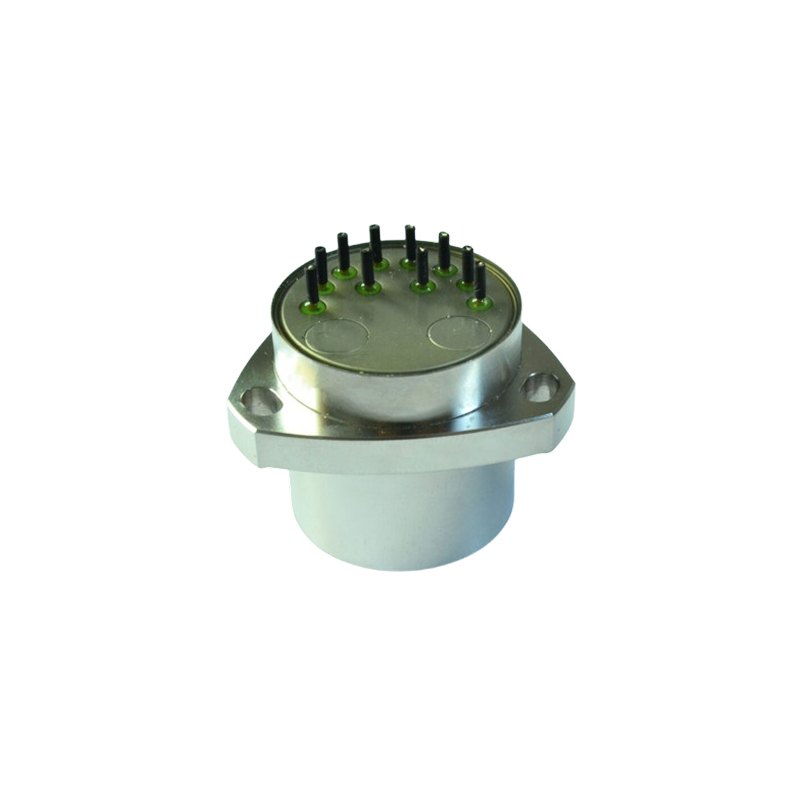
Development of Accelerometer Technology
The development of accelerometer technology can be broadly divided into three stages.
Table 1. Development of Accelerometer Technology
| Stage | Period | Representative Products | Main Characteristics |
| Stage One | 1950s–1980s | Pendulous Integrating Gyroscopic Accelerometers (PIGA) and Liquid-Floated Pendulous Accelerometers | High accuracy of approximately 10^-7 to 10^-8 g, but complex structures, large size, and high cost; mainly used in strategic-grade applications |
| Stage Two | 1980s–2010s | Quartz Flexure Accelerometers and Quartz Vibrating Beam Accelerometers | Moderate accuracy of approximately 1 micro-g to 1 milli-g; smaller size; widely used in navigation-grade and tactical-grade systems across land, sea, air, and space applications |
| Stage Three | 2010s–Present | Silicon and Quartz MEMS Resonant Accelerometers, Micro-Optical Accelerometers, and Atom Interferometer Accelerometers | Improving accuracy, with navigation-grade devices reaching below 1 micro-g; significant SWaP+C advantages; very low consumer-grade costs; emerging quantum accelerometers entering engineering development |
Accelerometer technology is now developing in two directions. Consumer-grade products continue to reduce cost and power consumption, while military-grade products pursue higher accuracy and better dynamic performance. MEMS technology is also driving accelerometers toward greater integration and intelligence.
Current Accelerometer Technologies
Based on their operating principles and applications, accelerometers can be classified as PIGA, quartz flexure accelerometers, MEMS resonant accelerometers, and emerging devices such as micro-optical and atom interferometer accelerometers.
Pendulous Integrating Gyroscopic Accelerometers
The pendulous integrating gyroscopic accelerometer is currently one of the most accurate accelerometers used in engineering applications. A PIGA measures acceleration by using gyroscopic torque to balance the inertial torque acting on a pendulous mass.
Its accuracy can reach approximately 0.1 micro-g, or 10^-7 g, and may be even higher in some systems. However, a PIGA has a complex structure, large dimensions, and extremely high manufacturing costs. It is therefore mainly used in long-range strategic missiles, strategic submarines, and other systems requiring exceptional inertial navigation accuracy.
Honeywell PIGA products have long occupied an important position in strategic-grade applications. China has also developed related capabilities, although differences remain in production volume and accumulated application experience.
As MEMS resonant accelerometers improve, they are beginning to compete with PIGA technology in some high-end markets. Nevertheless, we expect PIGA accelerometers to remain important in the near term for applications with extreme accuracy requirements.
Quartz Flexure Accelerometers
The quartz flexure accelerometer is a mainstream type of mechanical pendulous accelerometer. Its quartz pendulum moves under acceleration, while capacitive detection or torque feedback converts this movement into an acceleration measurement.
Typical accuracy ranges from approximately 5 to 1,000 micro-g. Quartz flexure accelerometers offer moderate size, high reliability, and good environmental adaptability. They are widely used in land, marine, airborne, space, and tactical missile systems.
Honeywell’s QA-series products, including the QA3000, are representative quartz flexure accelerometers. Their annual bias repeatability can reach several tens of micro-g, making them suitable for various aircraft, ships, missiles, and inertial navigation systems. Exail, formerly iXblue, has combined quartz flexure accelerometers with fiber optic gyroscopes or hemispherical resonator gyroscopes to produce high-performance inertial navigation systems.
More than 20 manufacturers in China produce or develop quartz flexure accelerometers. However, relatively few products provide both high accuracy and high long-term stability. In particular, only a limited number meet strategic-grade requirements for long-term bias repeatability and scale-factor repeatability.
Digital temperature compensation and improved precision manufacturing have recently enhanced the performance of Chinese quartz flexure accelerometers. These products are now being manufactured in volume for tactical-grade and selected navigation-grade applications.
MEMS Resonant Accelerometers
MEMS resonant accelerometers are among the fastest-developing accelerometer technologies. They include quartz vibrating beam accelerometers and silicon resonant accelerometers.
These devices measure acceleration by detecting changes in the resonant frequency of a beam or tuning fork under axial force. They offer quasi-digital output, high dynamic range, and strong resistance to interference. Their accuracy ranges from approximately 1 milli-g for consumer products to around 1 micro-g for navigation-grade or strategic-grade devices.
Quartz Vibrating Beam Accelerometers
Quartz vibrating beam accelerometers use quartz crystals as resonant elements and rely on the piezoelectric effect for excitation and detection. The technology has reached a relatively high level of maturity.
Emcore has developed quartz resonant accelerometers using a single proof mass and two resonant beams in a differential structure. Reported bias stability based on Allan variance reaches approximately 0.1 micro-g, while noise can be as low as 0.3 micro-g per square root hertz. Multiple resonant modes and self-calibration algorithms have also reduced full-temperature bias to below 2 micro-g.
Exail has developed a compact navigation-grade quartz vibrating beam accelerometer weighing less than 8 grams and consuming approximately 50 milliwatts. Its reported noise is 4 micro-g per square root hertz, with a full-temperature bias residual below 100 micro-g.
Epson has developed an all-quartz, single-resonant-beam accelerometer with bias stability of approximately 0.64 micro-g, noise of 0.16 micro-g per square root hertz, and a sensing-head size of only 9 × 7 × 3 millimeters. Thales has used a lever-amplified resonator with a Q factor of 1.2 × 10^6 and a full-temperature bias residual below 20 micro-g.
Research into quartz vibrating beam accelerometers began later in China. Recent improvements in MEMS manufacturing and measurement circuits have produced engineering prototypes with accuracy at approximately the 10-micro-g level. These devices are gradually replacing imported products in tactical-grade and navigation-grade applications.
Silicon Resonant Accelerometers
Silicon resonant accelerometers use silicon micromachining processes compatible with silicon MEMS gyroscope manufacturing. This compatibility makes them suitable for integrated inertial measurement units and an important direction for future navigation-grade accelerometers.
Honeywell developed a silicon resonant accelerometer for the HG7930 MEMS IMU. It uses a push-pull dual-tuning-fork architecture with a lever amplification mechanism. Its reported bias stability is better than 1 micro-g, with a full-temperature bias residual of 105 micro-g.
Draper Laboratory developed a strategic-grade silicon resonant accelerometer prototype in 2005. Thales has reported a navigation-grade device with bias instability of 0.3 micro-g and white noise of 1 micro-g per square root hertz.
Silicon Microgravity developed the RXL25 MEMS vibrating beam accelerometer with bias instability of 0.086 micro-g and noise of 0.40 micro-g per square root hertz. The corresponding RXL100 values are 0.34 micro-g and 0.91 micro-g per square root hertz. A differential MEMS vibrating beam accelerometer developed at the University of Cambridge achieved bias instability of 0.123 micro-g at an integration time of 10 seconds.
In China, silicon resonant accelerometer research is moving from laboratory prototypes toward engineering applications. Several universities and research institutes have developed prototypes with accuracy at approximately the 10-micro-g level. Long-term stability, full-temperature performance, and batch consistency still require improvement.
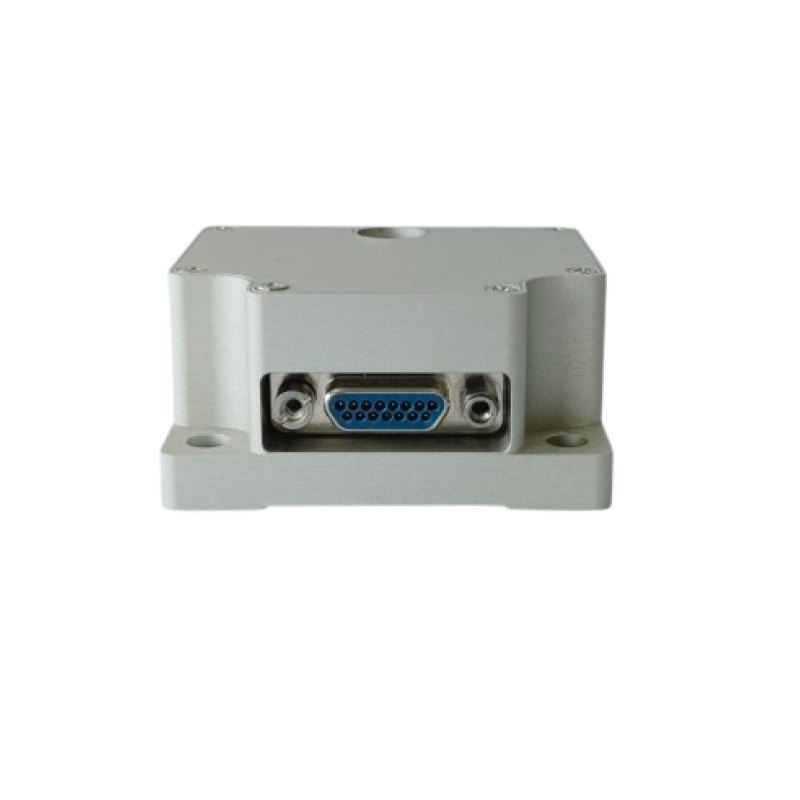
Emerging Accelerometer Technologies
Micro-Optical Accelerometers
Micro-optical accelerometers use optical interference, gratings, or Fabry-Perot microcavities to detect acceleration. They offer potential advantages in sensitivity and resistance to electromagnetic interference.
In 2022, the University of Isfahan developed a differential MOEMS accelerometer based on a Fabry-Perot microcavity. It achieved an optical sensitivity of 6.52 nanometers per g and a resolution of 153 micro-g. The University of California, Los Angeles, also developed a chip-scale optomechanical accelerometer using the optical spring effect. Operating-point calibration was used to extend its dynamic range.
Atom Interferometer Accelerometers
Atom interferometer accelerometers use cold atom interference to measure acceleration. Their theoretical accuracy can reach the 10^-10 g level, making them one of the most accurate accelerometer technologies.
An early Stanford University atom accelerometer achieved precision of approximately 10^-10 g under 1-sigma evaluation. Exail developed a three-axis quantum sensor that continuously tracks acceleration in three dimensions. In-situ quantum calibration reportedly improved its accuracy by a factor of 50 to approximately 6 × 10^-8 g.
The University of Birmingham developed the HIDRAG cold atom gravity sensor with a target sensitivity of 10^-7 g per square root hertz and monthly stability of 10^-9 g. Teledyne e2v is developing a compact cold atom accelerometer for atmospheric-density measurement in low Earth orbit, targeting a sensitivity of 2.3 × 10^-8 meters per second squared per square root hertz.
Cold atom accelerometers still have relatively large dimensions and high power requirements. Their engineering development is slower than that of atom gravimeters, but the technology is progressing rapidly.
Other Emerging Accelerometers
Other technologies include thermal, force-balance, and piezoresistive high-g accelerometers.
Stanford University used an AC-bias method to reduce the noise density of a MEMS thermal accelerometer by 23 percent and lower its 100-second drift by one order of magnitude.
The University of Fukui developed a force-balance accelerometer with a hybrid reluctance actuator. Adjusting its negative stiffness reduced low-frequency noise at 1 hertz by 77.7 percent.
The Korea Advanced Institute of Science and Technology designed a cross-symmetrical piezoresistive high-g accelerometer with cross-axis sensitivity of approximately 1 percent, impact resistance of up to 200,000 g, and a reported production yield of 90 percent.
Future Trends in Accelerometer Technology
Navigation-Grade MEMS Accelerometers Will Mature
Quartz and silicon MEMS resonant accelerometers are progressing from tactical-grade toward navigation-grade and strategic-grade performance. Some products have achieved bias stability between approximately 0.1 and 1 micro-g, while their full-temperature performance continues to improve.
Over the next three to five years, navigation-grade MEMS accelerometers may increasingly replace conventional quartz flexure accelerometers in medium- and high-precision inertial navigation systems.
SWaP+C Will Drive Wider MEMS Applications
Consumer electronics, vehicles, drones, and wearable devices require smaller, less expensive, and more energy-efficient accelerometers. MEMS accelerometers offer chip-scale dimensions, milliwatt-level power consumption, and low costs in volume production.
Defense applications, including compact guided munitions, soldier navigation equipment, and miniature unmanned vehicles, are also sensitive to size, weight, power, cost, and capability. MEMS accelerometers are therefore well suited to these systems.
New Principles Will Extend Accuracy Limits
Micro-optical and atom interferometer accelerometers are gradually moving beyond laboratory research. Commercial cold atom gravimeters have already demonstrated potential in volcanic monitoring, resource exploration, and gravity-aided navigation.
Atom accelerometers may eventually support long-duration navigation without GPS. Advances in integrated photonics and micro-nano quantum technology could also enable smaller atom-based sensors over the next decade.
Intelligent Calibration and Sensor Fusion Will Expand
Accelerometers are increasingly incorporating self-calibration, temperature compensation, fault diagnosis, and health monitoring. Neural networks may compensate for temperature errors, while on-chip stress sensors can monitor changes caused by assembly and packaging.
Multi-sensor fusion can further improve dynamic performance. Future accelerometers will therefore develop from individual sensing components into intelligent sensing units combining hardware, electronics, and algorithms.
Precision Manufacturing Will Remain a Key Challenge
High-precision accelerometer performance depends heavily on manufacturing quality. Quartz vibrating beams require accurate etching, while silicon resonators require high-aspect-ratio micromachining.
Assembly stress, thermal stress, packaging stress, material uniformity, and long-term stability continue to limit mass production and reliability. Low-stress packaging, precision manufacturing, improved materials, and data-driven process optimization will remain essential.
Conclusion
Accelerometer accuracy and stability directly affect inertial navigation performance. PIGA accelerometers continue to serve the most demanding strategic-grade applications, while quartz flexure accelerometers remain widely used across land, marine, airborne, space, and tactical systems. MEMS resonant accelerometers are rapidly approaching navigation-grade and strategic-grade performance, and emerging optical and atom-based devices are extending the limits of accuracy.
At Andelu, we believe that accelerometer technology will continue to advance toward higher accuracy, smaller size, lower cost, lower power consumption, and greater reliability. Progress in materials, micro-nano manufacturing, low-stress packaging, temperature compensation, and intelligent self-calibration will support the next generation of high-performance inertial navigation systems.